
HR’s Next Leadership Mandate: Make the Organization Ready for AI
BY GERARD BROSSARD, CEO AT DENISON CONSULTING
AI transformation is often framed as a technology challenge. For HR leaders, it is something much bigger: an organization challenge.
The success of AI will depend not only on the tools a company adopts, but on whether its people, leaders, structures, workflows, and culture are ready to use those tools effectively at scale. That puts HR in a critical position—not simply to support AI adoption through training and communication, but to lead the design of the conditions that turn AI investment into measurable business performance.
The Question Leaders Must Ask First
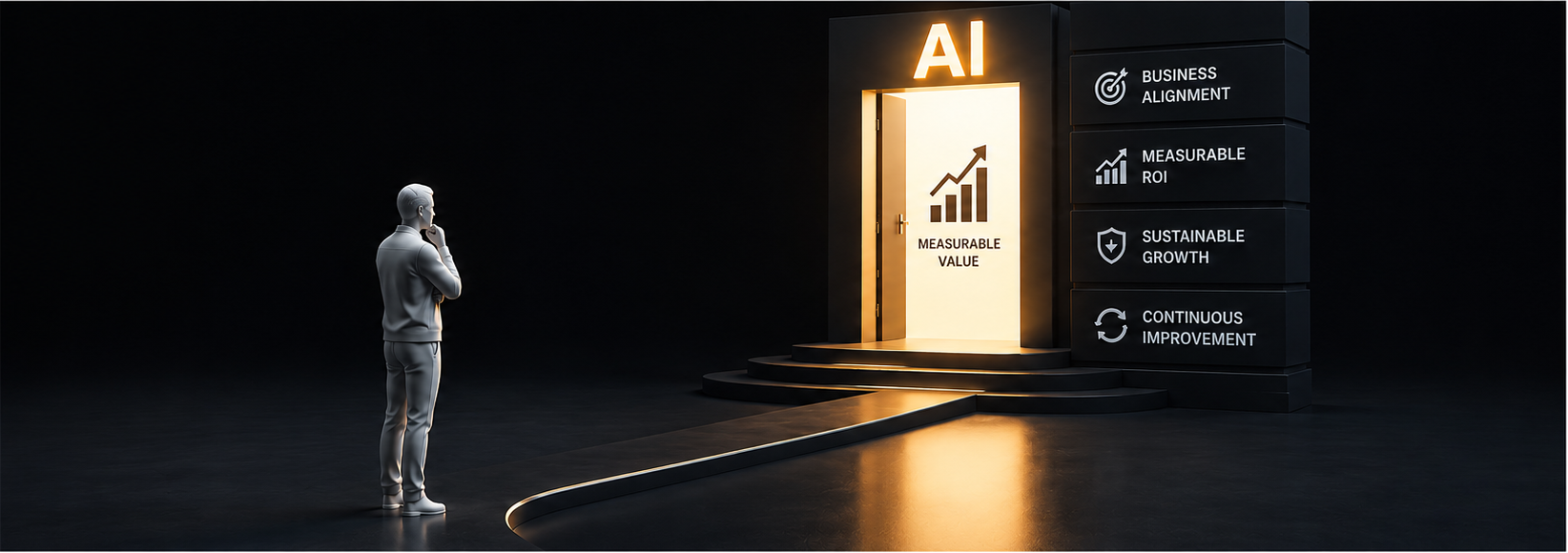
Before investing further in AI, leaders need to ask a more important question than “How many AI initiatives do we have?”
Is our organization ready to turn AI into measurable performance at scale?
Our position is that AI value depends less on access to technology and more on the readiness of the organization using it. In a clear, adaptive, engaged and coordinated culture, AI becomes a multiplier. Where priorities are unclear, trust is low, workflows are rigid or functions operate in silos, AI exposes—and often amplifies—the weaknesses leaders hoped technology would solve.
“AI will not fix organizational dysfunction. It will reveal it.”
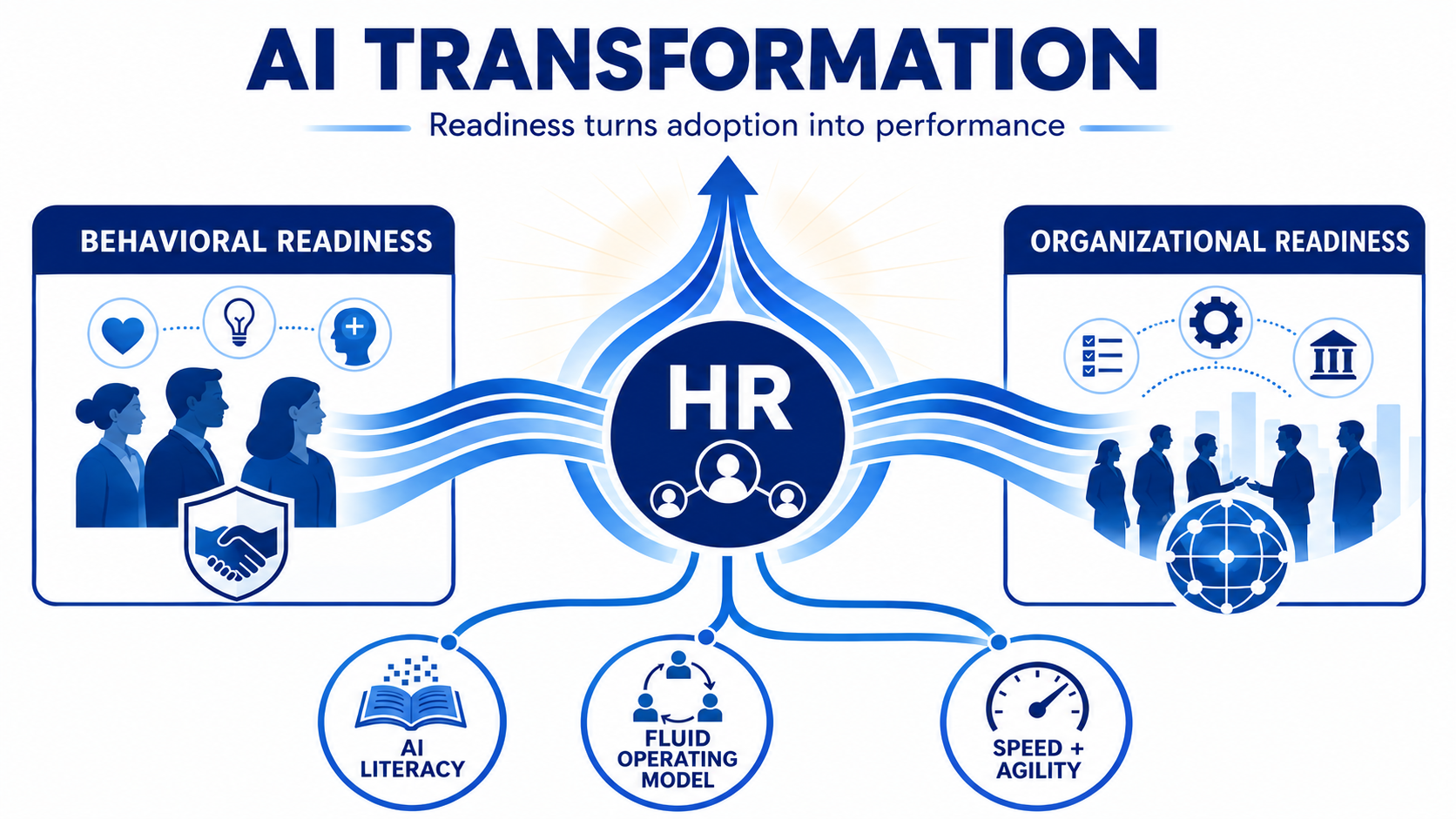
This is why AI transformation must address two connected dimensions:
|
Behavioral Readiness Are people willing, confident and equipped to use AI responsibly? |
Organizational Readiness Can the enterprise integrate, govern, coordinate and scale AI-enabled ways of working? |
HR as Co-Architect of Transformation
HR’s role goes far beyond training and communications. HR should work with the CEO, board, technology and business leaders to create the conditions AI requires:
The Risks of Imbalance
→ High employee enthusiasm without organizational capacity → experimentation without scale.
→ Strong systems and governance without employee confidence → infrastructure without adoption.
Five Questions HR Must Help Leaders Answer
For HR, this means helping leaders move the conversation beyond pilot counts and adoption metrics to the questions that determine whether AI can create value at scale:
| 1. | What enterprise priority will this investment improve? |
| 2. | What behaviors and workflows must change? |
| 3. | Where could AI become trapped in silos? |
| 4. | How will value and risk be governed? |
| 5. | What readiness gaps must be closed before scaling? |
These questions bring the challenge back to where HR can have the greatest impact: ensuring the organization has the clarity, capability, confidence and operating conditions needed to turn AI investment into performance.
The future will not belong to the organizations with the most AI pilots. It will belong to those that combine mission, adaptability, involvement and consistency with AI literacy, fluid organization design, trust, speed and disciplined execution.
For HR, this is not simply another change program to support. It is an opportunity—and a responsibility—to help shape the organization that successful AI transformation requires.